
Stained Glass Window Frame Repair and Protective Coverings
“All Stained Glass , when covered by protective coverings, must have a ventilation system to prevent overheated glass and moisture buildup”. - National Preservation Society, 1996 Study
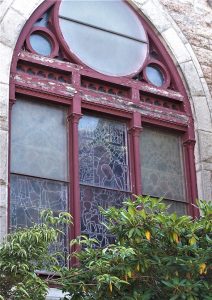
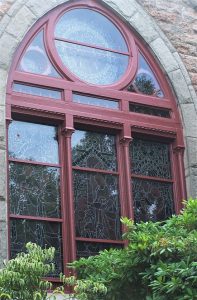
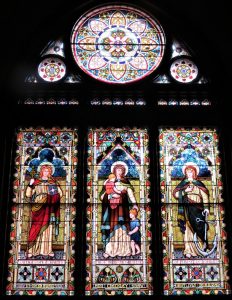
Channing Memorial Unitarian Church. Newport. RI.
This historic land marked church, in the coastal town of Newport, RI had extensive wood rot in the frame from moisture buildup between layers of glass. This damage was a direct result of improperly installed protective glass (no venting).
Our team of stained glass experts and team of woodworkers , removed the old protective glass, corrected the wood damage using epoxy consolidation, then repainted the frame and installed new 120 MPH Hurricane Code protective glass.
The new protective glass was installed with our patented perimeter framing system to insure proper ventilation and to allow air to circulate to "cool the stained glass". The framing was "bent to fit" the historic frame and custom colored to minimize any visual effects.
Complete releading of the stained glass window was done as part of the project.
HOLY NAME CHURCH MANHATTAN, NY
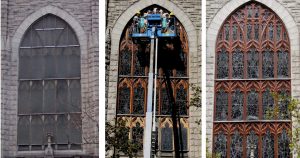
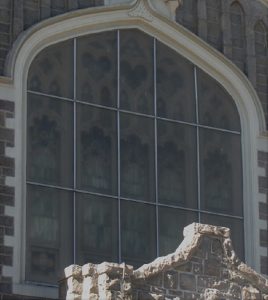
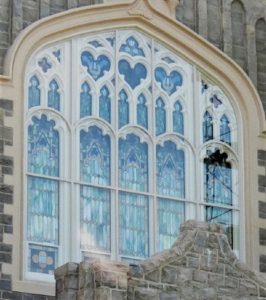
Holy Name Church, Before - During - After
Egan Church Restorations were asked to offer a quote to replace this 35 ft tall, ornate wood frame for Holy Name Church. During our inspection, we discovered that what others had identified as "cracks in the frame" were in reality, ordinary seams. The frame is so large, it was built and installed in sections. Over time, the wood dries and shrinks, causing the seams to be wider and more noticeable.
Egan Church Restorations removed the old discolored protective coverings, repaired small sections of wood rot with wood epoxy repair consolidation and repainted the frame. To avoid the unsightly "tic tac toe" grid on this beautiful frame, we cut the new protective covering to fit each individual section of glass. 15 other windows were also done at the same time.
ST JOSEPH'S CHURCH. NEW LONDON, CT
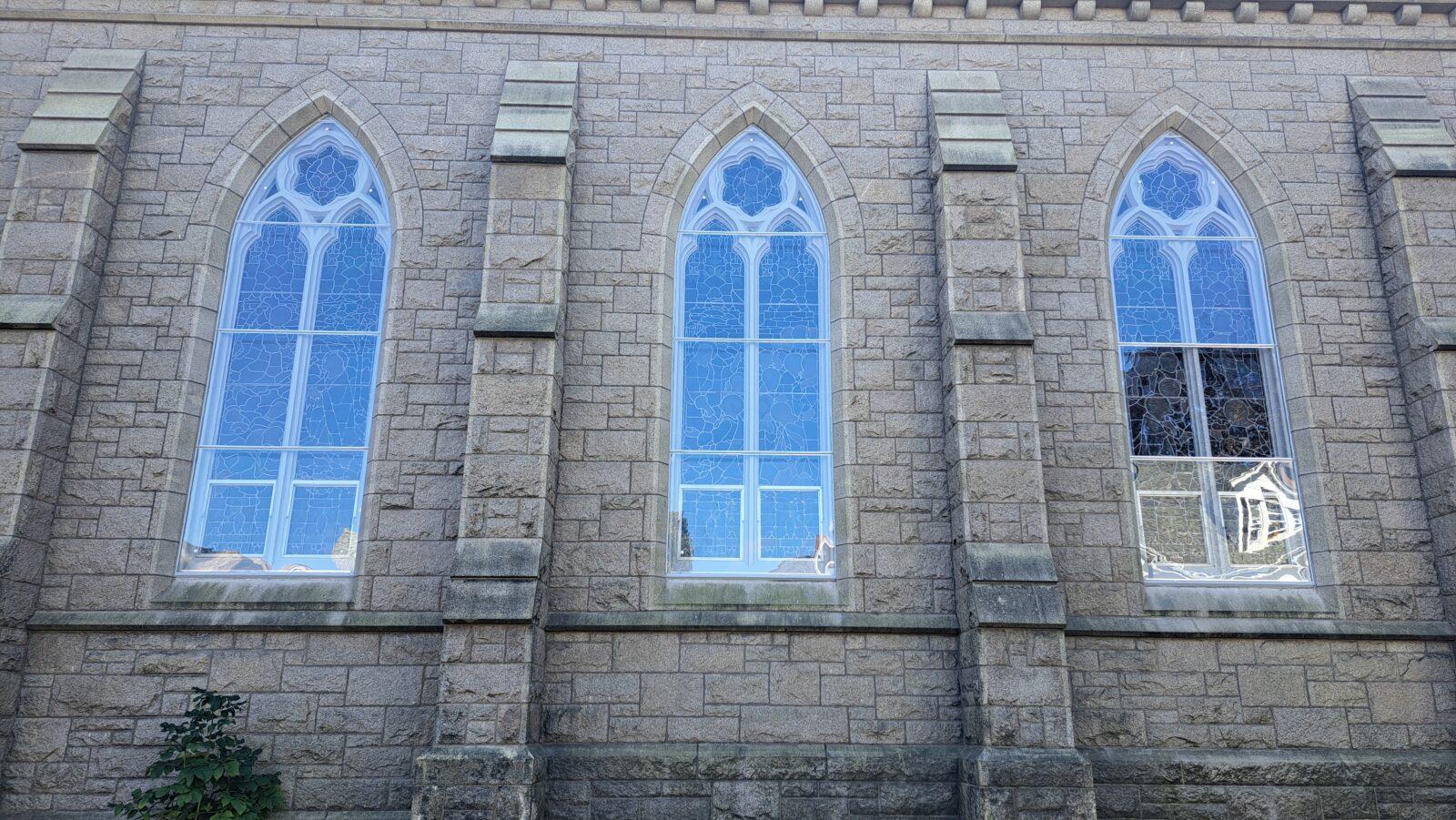
Old, incorrectly installed protective glass (no venting) were removed from all of St Joseph's windows. ( 25 windows total). Spot repair of the wood frames was done using epoxy consolidation. The entire frame was then caulked, puttied and repainted.
We then installed the "Bovard Studio" patented perimeter framing system with 1/4 in tempered glass. 120 MPH winid load. The perimeter framing was "bent to fit" these ornate, intricate frames to allow their beauty to be seen.
St Lawrence Church | New Bedford, MA
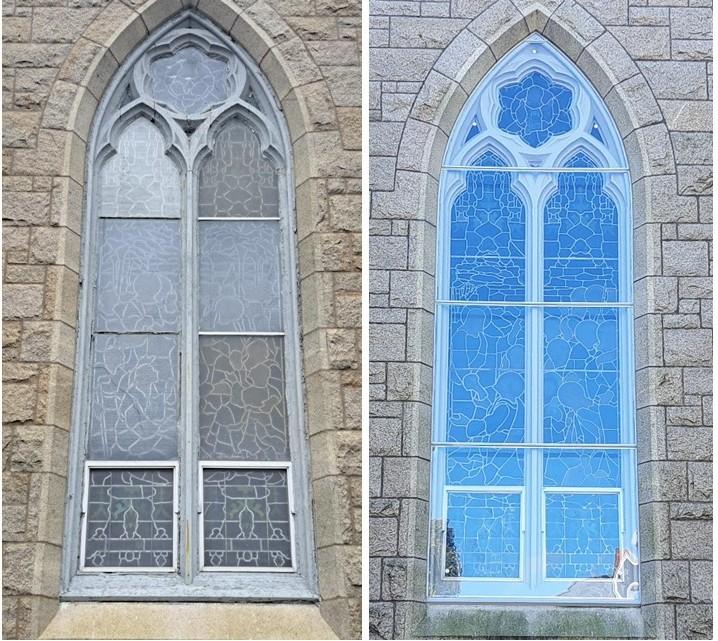
Egan Church Restorations were hired by St Lawrence Church in New Bedford, MA to repair the north side window frames which had been leaking, causing plaster damage in the church. We began the project by removing the old, incorrectly installed protective glass to access all parts of the wood sash and frame. We then spot repaired wood rot in the sills and several sections of the frame. We reputtied the stained glass, repainted the frames and then installed new 1/4 in thick protective coverings with the appropriate number of vent openings to prevent future damage.
St Joseph Church - Cumberland, RI.
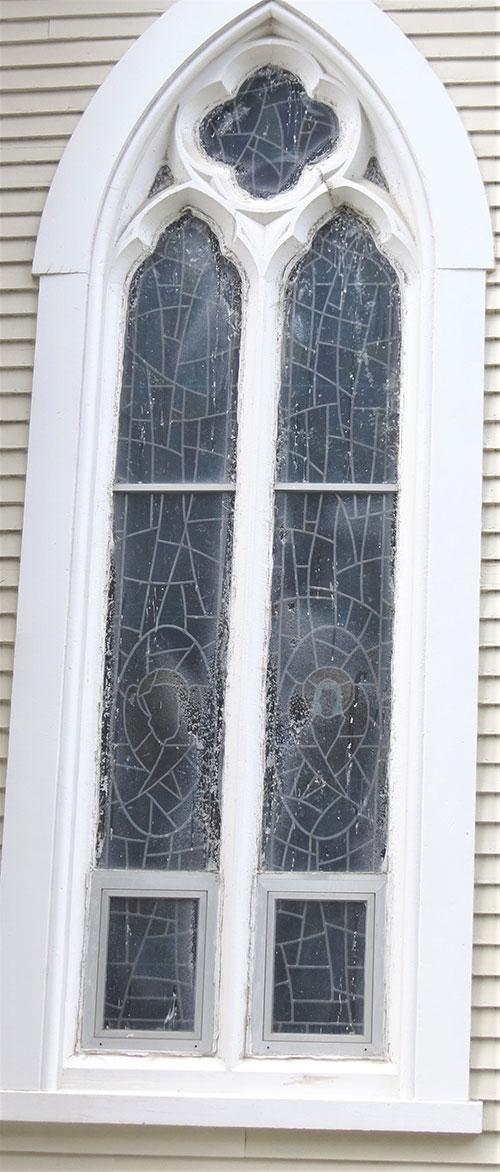
Before Repair
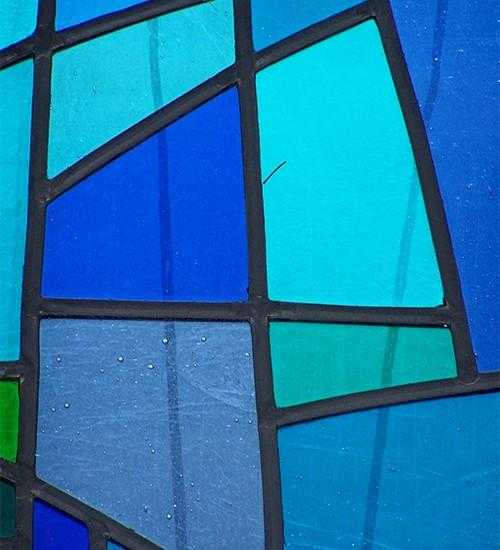
Top right : Water Streaks on the outside face of the stained glass, indicates water is being trapped between the stained glass and protective covering. This is due to the protective coverings had been completely sealed and had no air circulation between layers as required.
Water will rot the frames and oxidize the lead came.. Premature oxidation of the lead, will result in a major deterioration of the window.
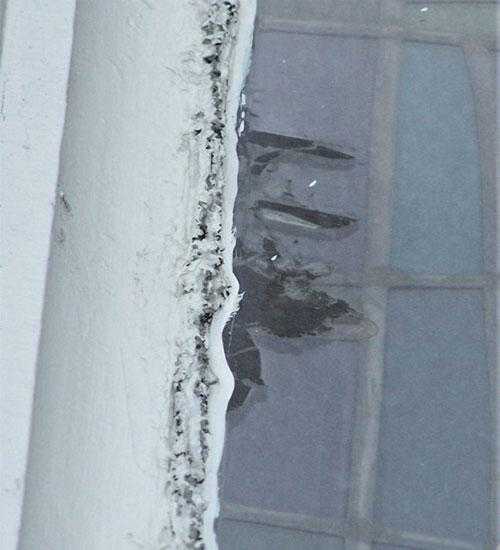
Bottom right: Mold has also been created by the moisture buildup between layers of glass.
Mold is not only unsightly, it is also a noticeable health hazard for church congregants.
Stained glass windows that were only 40 years old, were seriously compromised due to the incorrectly installed projective coverings. Not only did they lack proper air circulation and venting, the lexan material was installed directly against the stained glass. (3/4 in space is required). Mold developed and bulges in the stained glass began.
Another problem created by lack of venting is premature bulging and stress cracks in the stained glass. Unlike clear glass, colored stained glass absorbs heat and will expand when heated. Because there is no expansion joint in the window sash (the glass would be loose and crack) the expanding glass has no place to go. This leads to either bulges or stress cracks.
Corrective Measures
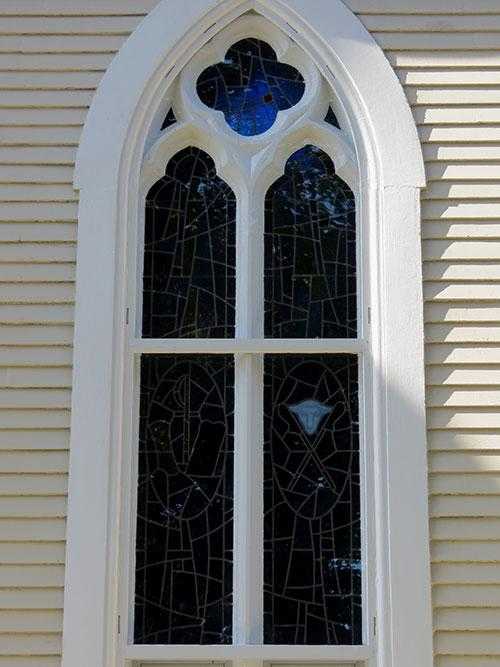
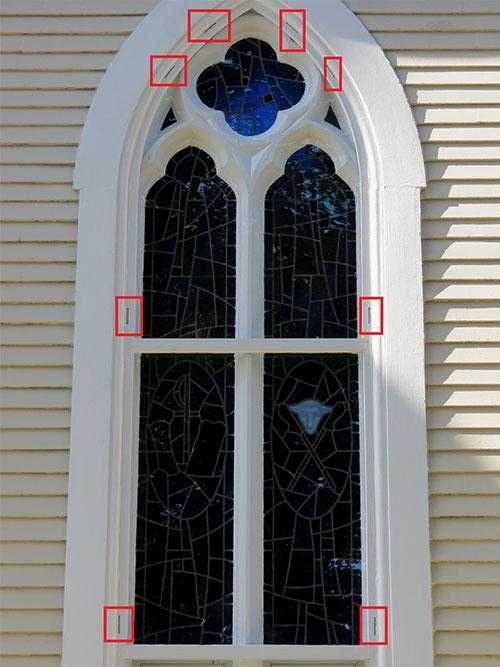
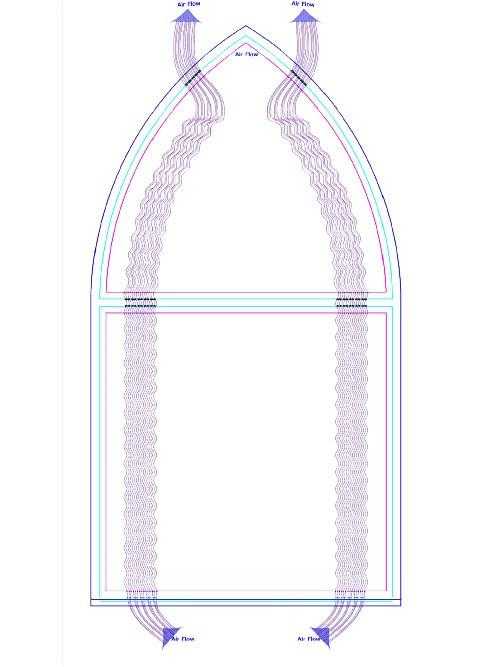
Repairing the window frames included removing the old lexan material. We then installed Bovard Studio's "patented perimeter framing system " with built in air vents. Air circulation has been specified for all stained glass when covered by protective glass by the National Preservation Society. Air vents were added at the bottom and the top, to allow natural air flow (hot air rises).
Our perimeter framing was " bent to fit" the original window frame design to preserve the natural beauty .
For protective glass, we used 1/4 inch thick, laminated glass. Laminated glass ( like your windshield glass) will not discolor but is very tough. It will stay in place even if cracked, so your stained glass is always protected.